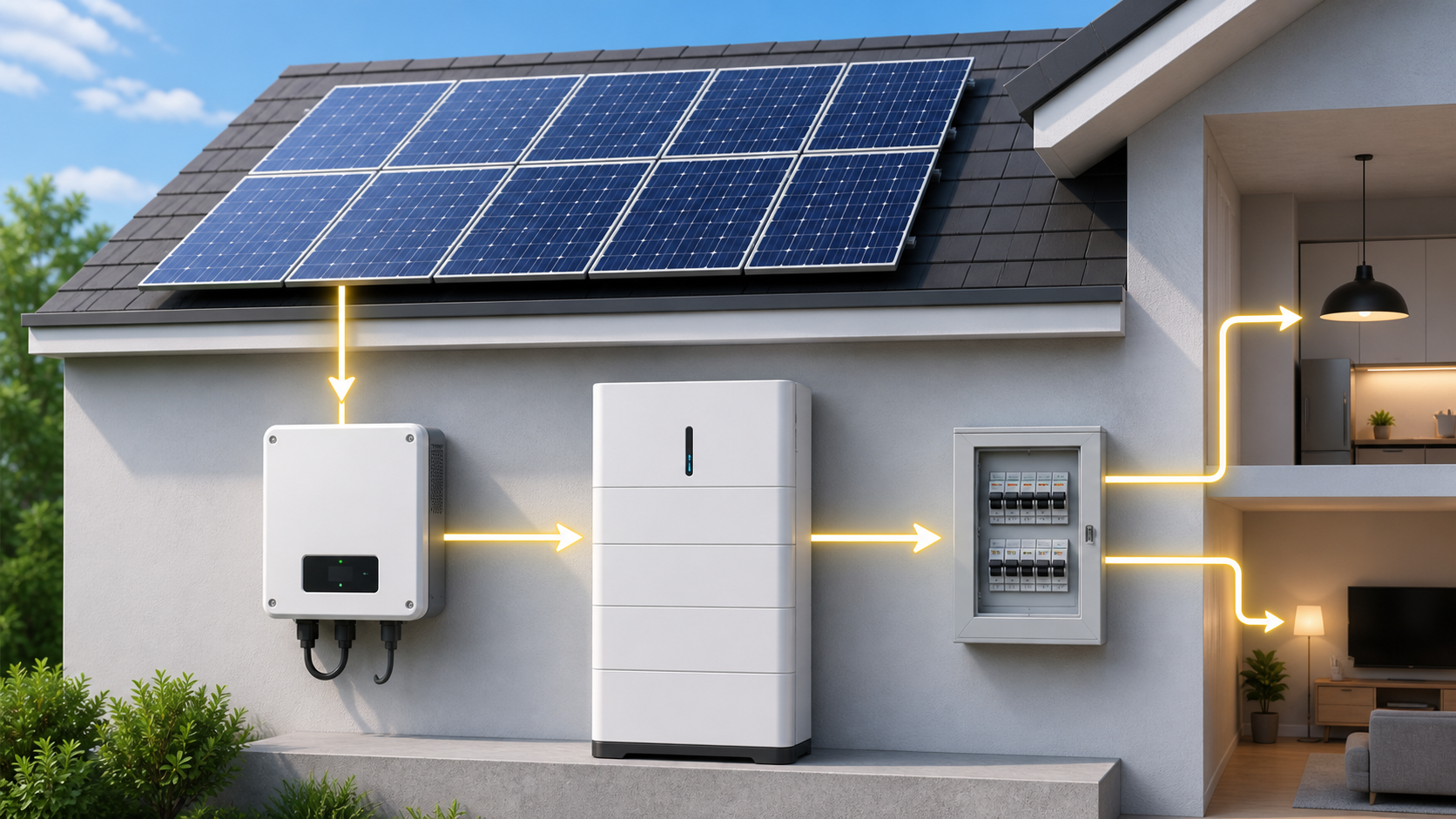
Choosing a solar inverter for an energy storage project is not only about selecting a power rating. The inverter is the control point between solar PV, the battery, household or site loads, and the utility grid. A suitable choice helps the system operate according to the project's actual goal; a poor match can limit performance or make future expansion more difficult.
This guide explains the main questions to answer before selecting an inverter for a solar-plus-storage project.
## Start with the project goal
First, define what the system needs to achieve. Common goals include increasing solar self-consumption, reducing peak demand, supporting essential loads during an outage, or operating in a weak-grid or off-grid environment.
These goals affect how the inverter should be configured. A project focused on backup power needs enough output power for its essential loads. A project focused on solar self-consumption needs an inverter and battery combination that can manage the expected solar surplus. A commercial site may also need to consider three-phase supply, tariff periods, and demand peaks.
## Check the power requirement
The inverter's rated output power should reflect the loads that it is expected to support. Review normal operating demand, likely peak demand, and the starting current of equipment such as pumps, motors, or compressors where relevant.
For backup applications, list the loads that must remain available during an outage. Lighting, refrigeration, communications equipment, and selected production or service loads may be priorities. This list helps define the necessary inverter power and avoids designing around every load on the site when that is not required.
## Match the inverter with the battery
The inverter and battery must work as a system. Key checks include battery voltage range, communication compatibility, permitted charge and discharge power, and control settings. A battery may have sufficient energy capacity but still be unable to deliver the required power if the inverter or battery limits are not aligned.